Don’t Believe the Hype!

Does anyone remember the movie Lawnmower Man? When I think of virtual learning, that’s what comes to mind. The main character of the film (Jobe) is able to learn in a virtual environment and ultimately become quite intelligent (among other things). The biggest difference? It’s virtual reality as opposed to a virtual environment. I found that there are some virtual reality learning environments out there, but Second Life is not one of them.  Continue reading

A Second Chance at Learning?

From the perspective of virtual learning, Second Life provides some interesting options. It seems many places already take advantage of the “virtual world” Second Life offers. From schools (both colleges and universities) to foundations, it appears there’s something for everyone. Health organizations like the American Cancer Society, along with environmental groups like American Wildlife Rescue (among several others [viewable through Eco Commons]) are trying to both inform and engage people while utilizing a completely different approach. I even found a few references to learn a second language with the help of Second Life. Check out Virtlantis if you’d like to find out more.

Continue reading

Teaching on SoundCloud?

In thinking about SoundCloud from a design perspective, I realized it could possibly be used as part of a simulation. Alessi and Trollip explain that educational simulations are divided into two groups based on their objectives. Teaching about something and teaching how to do something. The about group consists of physical and iterative simulations while the how to do group is broken down into procedural and situational simulations. (214) The authors go on to break down confusion surrounding simulations. Different groups of people may interpret the meanings of simulations differently. “When civil engineers or economists refer to a simulation, they likely mean an iterative simulation. Psychologists and businesspeople typically mean situational simulations whereas training professionals generally mean physical or procedural simulations.” (214)
Continue reading

Development Time

To begin developing an interactive video, I had to first think about my audience. Have you ever heard of Know Your Customer (KYC)? It can be interpreted a number of different ways. Having worked in financial services for almost a decade, the first thing I think of is verifying whom you’re speaking with. Asking them unique identification questions so they can prove they are who they say they are. From a design perspective however, it’s totally different. One must “be clear about who your client really is because this is who you have to satisfy with your efforts.” (407) In this case, knowing your client has nothing to do with verification and everything to do with the Analysis phase of ADDIE.

Continue reading

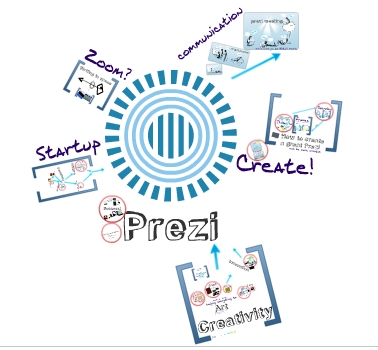
Prezi and PowerPoint….. What to choose

At first glance, Prezi seems pretty self-explanatory. I found it initially to be more engaging than PowerPoint along with possessing so many alternate options. Maybe I just don’t use PowerPoint often enough, or maybe I haven’t been utilizing it to its fullest extent.

In her Master’s thesis Prezi v. PowerPoint: Finding the right tool for the job, White explains “Prezi provides a distinct presentation experience that presents information in a non-linear fashion. This allows the presenter more flexibility and creates a way to show relationships among different items in the presentation.  In doing so, the audience may get a better idea of the big picture. At the same time the zooming feature in Prezi could potentially capture and hold an audience’s attention.” (p.2)

Continue reading

To believe or not to believe (in ADDIE)? That is the question…..

So, ADDIE’s been around since the 70’s and people have been using it successfully since then right? Created in 1975 by the Center for Educational Technology at FSU for the Army, it was so successful that all branches of the Armed Forces started using it! That speaks for itself.

The original ADDIE model had five basic phases with 19 “essential” components; but was later updated, keeping the five phases and enhancing the steps within the phases. The site providing this background reminds us that ADDIE should be used “as a guide for gaining direct intuitive insight into a problem” as opposed to following it “blindly”. Clark identifies some potential problems with ADDIE and indicates it was never intended to actually “determine if training is the correct answer to a problem”. He encourages the use of “performance analysis tools” to ensure proper solutions.

Continue reading

Analyze what?

ADDIE

Intulogy states that ADDIE can allow us to Analyze training needs, Design and Develop training materials, Implement training, and Evaluate its effectiveness. Sounds perfect! They start off by “analyzing three important areas:” achievable business goals, materials being taught, and capabilities of the learners. Like everyone else in pretty much every situation, people want results as soon as possible (if not “yesterday”) and often think the analysis phase can be skipped. Intulogy knows the importance of accurate analysis and outlines what may happen if this phase is not given the proper attention.

Continue reading

Origins of Intelligence

What makes a person intelligent? In Intelligence Reframed, Gardner tells us that “In traditional schools, the intelligent person could master classical languages and mathematics, particularly geometry.” (1) (Uh oh, I’m in trouble.) While in the business world, someone who finds opportunities and isn’t afraid to take risks could also be considered intelligent. (Phew, what a relief…..)  Back in the day, if you could follow orders you may have been regarded as intelligent. More recently, we’ve identified “symbol analysts” who can decipher codes, and “masters of change” who solve problems and seem to adapt well to changing environments. Apparently, we’ve been trying to figure out this intelligence thing for quite some time.

Continue reading